Hidden Gems
The Most Successful, Versatile Director You’ve Never Heard Of
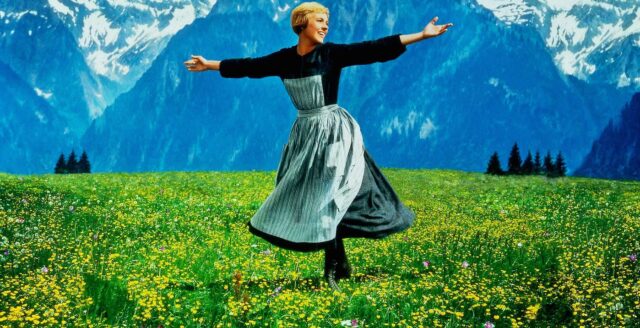
Name almost any type of film and it’s likely Robert Wise made at least one of them.
Whether it's a horror movie, a science-fiction outing, a war picture, an ensemble drama, a suspense film or a musical, Wise handled it, usually in exceptional fashion. (The only area he really didn’t tackle was pure comedy.)
Yet predictably, his versatility didn’t play well with some film commentators of his time who prescribed to the “auteur” theory, which lent more significance to directors who consistently followed a signature style in their work.
Actors
The 10 Greatest Mustaches In Movie History
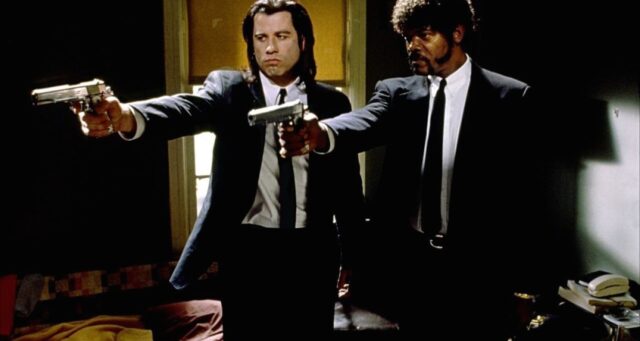
In a variety of interesting ways, mustaches make the man in movies.
At the dawn of film, it was usually the villain wearing the ‘stache. In silents and old-time serials, they would twirl them to signify a dastardly deed was being contemplated. These “types” would go on to inspire the indelible character of Snidely Whiplash in the “Dudley Do-Right” segment on “The Rocky and Bullwinkle Show.” I loved that guy.
In the realm of silent comedy, the sight of well-placed follicles on the kisser also could elicit laughter from audiences, as evidenced by Charlie Chaplin, Ben Turpin, Andy Clyde, Oliver Hardy and others.
Actors
Robert Duvall: The Actor’s Actor
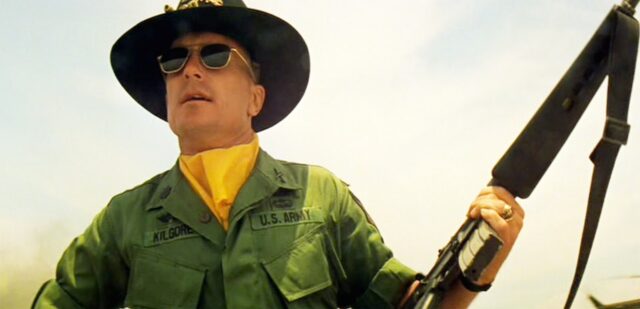
Robert Duvall fully earns the hallowed term “actor’s actor.” He is superb in most anything he’s in. And at age 83, he’s still doing his thing. On a plane recently, I finally caught Tom Cruise’s diverting thriller “Jack Reacher” (2012), and there was octogenarian Duvall playing a gun dealer, stealing every scene he was in.
Watching him ace this small but key supporting role made me feel it was time to pay tribute to a man who’s appeared in some of the greatest films of the past half-century.
Born to William Howard Duvall, a career military officer from Virginia, and his wife Mildred, an amateur actress and descendant of General Robert E. Lee, Duvall's childhood was peripatetic; his father was transferred frequently to various bases around the country.
Actors
Bill Murray And the Roles that Got Away
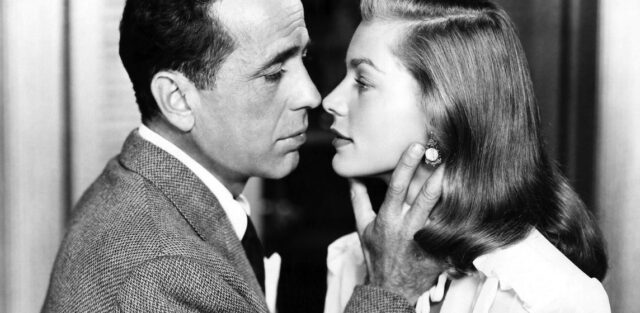
Bill Murray has been doing things his own way since the beginning of his career. Not only does he operate without an agent or manager, but he seems to make it virtually impossible to contact him. He has a P.O. box somewhere in America, and if you're lucky enough to figure out where it is, you can mail your scripts to him. If you’re extra lucky, and we mean lottery winning lucky, he may actually check his mail that year. It's a small miracle that he learns about any offers at all.
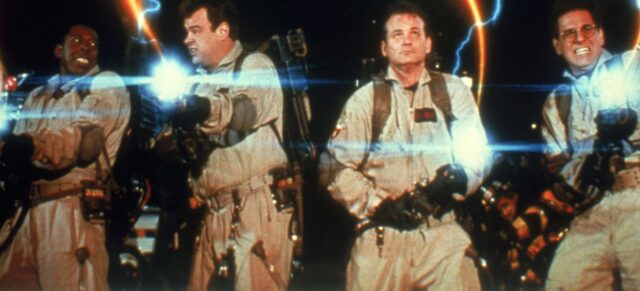
It's not that Murray doesn't want to work. It's just that his way of playing the Hollywood game is distinctly different from the way everyone else plays it. This isn't necessarily a star trip, either, for he liked to keep people guessing long before he was scoring at the box office with hits like "Ghostbusters" (1984).
For instance, Murray was so uncommunicative with the production crew of "Caddyshack" (1980) that they had no idea if he was going to show for his first day of shooting. Finally, just moments before his first scene was to begin, he arrived ready to bring the memorable Carl Spackler to life.
Actors
Ultimate Role Models: 7 Transitions from Model to Actor
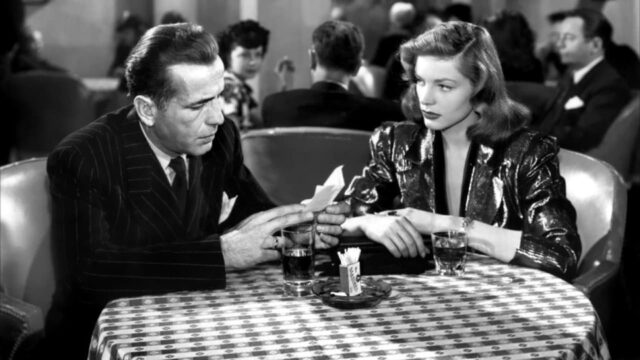
Keep all those “Zoolander” jokes to yourself, because being a model in a movie doesn’t necessarily mean a pretty face (or body) catwalking across the screen for mere amusement or titillation, or because the director needed a hot date for the Screen Actors Guild awards. Underneath the high cheekbones and sculpted abs often lie the makings of a great actor. Here are some of the folks who made astonishingly smooth moves from still photography to motion pictures.
Actors
Lauren Bacall’s 9 Best Performances
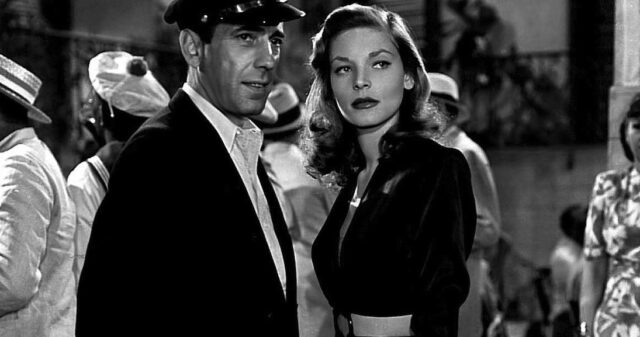
Lauren Bacall will be remembered as a larger than life Hollywood figure, but film lovers might be surprised to learn that she appeared in less than 50 features. In a business where one dreads being forgotten, Bacall took her time when it came to taking roles, confident that the public would still be there when she returned.
During her heyday, Bacall rarely worked more than once a year. Later, she was known to take long breaks in between projects, something few actresses did in those days. The result is a filmography that is more tastefully cultivated than most, with very few bombs or stinkers. Even a movie like “The Fan” (1981), a gaudy thriller which some felt was beneath her, has endured as a kind of cult object. When that one wrapped, Bacall did another of her disappearing acts, this time for seven years.
Of course, the dismantling of the old studio system may have had something to do with her dwindling appearances; she always preferred that more orderly way of making pictures.
Actors
Lauren Bacall, 1924 – 2014: The Sultriest Voice in Cinema
Lauren Bacall, one of the most alluring leading ladies ever to come out of Hollywood, passed away Tuesday at the age of 89. Though she was best known for playing opposite husband Humphrey Bogart in such classics as “The Big Sleep” (1946) and “Key Largo” (1948), her film career sustained itself long after Bogart was gone. “Written on The Wind” (1956), “Harper” (1966), “Murder on the Orient Express” (1974), and dozens of other films benefited from her uniquely feline presence and husky voice. She was class, sass, humor, and chutzpah all rolled up into one glamorous package.
Bacall, a New Yorker born Betty Joan Perske on September 16, 1924, was only nineteen when she made her screen debut opposite Bogie in “To Have and Have Not.” Despite her youth, she held her own opposite an established star more than twice her age. Still, during her first few days on-set, she was so nervous she prayed the camera wouldn't pick up her hands shaking. It didn't.
And of course, she created that film’s most indelible moment when she purred to Bogart, “You know how to whistle, don't you, Steve? You just put your lips together and... blow.” Audiences indeed were blown away. So was Bogie; he and Bacall were married within a year. Their relationship was one of the more storied romances in Hollywood, lasting until Bogart’s death from cancer in 1957.
Horror
8 Great Horror Flicks For the Smart Crowd
Even though much of the appeal of horror movies lies in their power to tap into primal fears, I’d like to think our cerebral cortexes have evolved to the point where we want our thrills to test our minds as well as our nerves. After all, horror movies often leave the greatest, and most lasting, chill when they hinge on psychological, rather than fantastical, terrors.
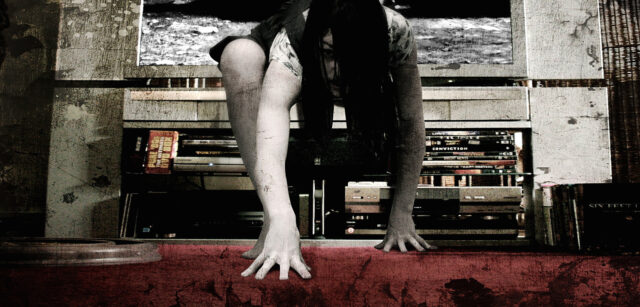
The higher the intelligence of the piece, the harder it is to dispel that chill, and the more elegant the premise, the more likely it is to stay lodged in our psyches. Smarter scary movies just seem more believable, even when they are set in space, or when ghosts crawl out of the television.
Not surprisingly, a large percentage of such titles are adapted from works of fiction. The “interior” aspect of fiction reminds us that the worst nightmares are often conjured not by reality but by our own imaginations.
Actors
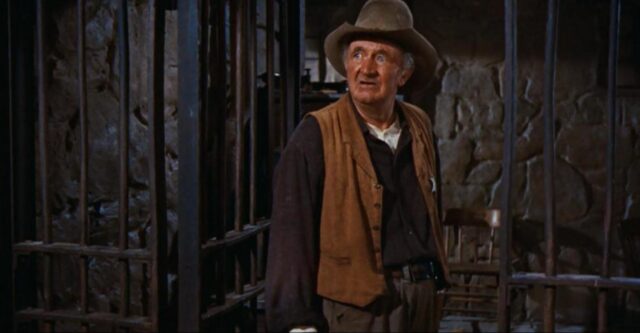
Hollywood’s Top Second Banana: Walter Brennan
Do you remember Walter Brennan? Sure you do. No? Well, you should. After all, he spent four decades as sidekick to some of the top stars in the business. If his face isn’t familiar, I’ll bet you’d recognize his voice. Like Cagney, Bogart, and Mr. Magoo, Brennan owned a voice that was unmistakable. It became fodder for comedians and impressionists, and I’m pretty sure one of your uncles took a crack at it, too.
Brennan was the go-to guy when a director needed a town drunk, a good-hearted hobo, a local priest, or a deputy (he was indeed a natural for Westerns). But to say he was merely adept at playing local yokels undermines his achievements in the business. Brennan won the first ever Best Supporting Actor Oscar in 1937, and by 1941 had won it twice more.
His feat of winning three Academy Awards wasn’t matched by another actor until Jack Nicholson and Daniel Day-Lewis did it decades later (and Nicholson and Day-Lewis needed a lot more than four years to equal Brennan’s record). To date, Brennan is still the only actor to win three statuettes for Best Supporting Actor.