
Classics
YA on Film — Our Guide to the Best Movies That Are Young And Adult
Young adult used to be just another stage in personal development, starting somewhere around the end of Barbie dolls and army men, and cresting just after the discovery of beer and indie rock. Growing up seems to happen in that one, long, hot zone of emerging identities and burgeoning freedom.
These days, YA is an entire industry of books and movies, a full lifestyle in fact, and one that doesn’t end once the “adult” is no longer “young.” After all, growing up is never quite over, which explains why YA audiences are as likely to be “adult” as they are “young.” For instance, who is the prime audience for “The Hunger Games?” Not just kids.
One forgets that the term “teenager” gained traction only in the 1940s, as the popularity of Frank Sinatra took hold with a multitude of teen girls. Suddenly, this overlooked group had the attention of radio programmers and audiences, and a demographic was born.

Directors
Two Sides of the Camera: 8 Directors who Directed Themselves
Why, one has to ask, is it not pure megalomania whenever directors direct themselves? Simply put, this is a breed of actor (and director) who understands the vision so completely that the need to control every element, even their own performances, overrides all doubt.
Of course, this could look quite a lot like megalomania, or it could simply be pure genius. Or perhaps a bit of both.
For many auteurs, it feels perfectly natural. Orson Welles started out with the Big Bang of "Citizen Kane," his first feature film — with credits for directing, producing, co-writing, and starring — crafting what many critics agree is the best movie of all time.
Themes
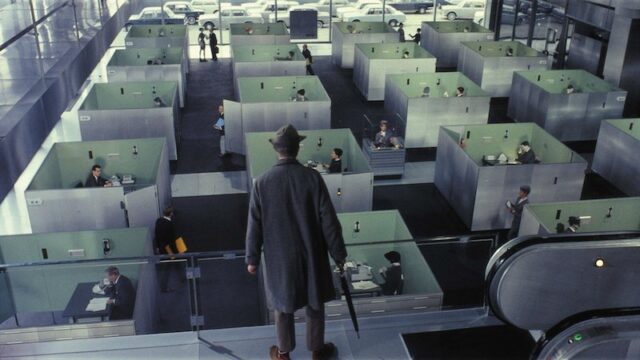
Great Structures: 9 Movies Where Buildings Star
Movies are palaces of the imagination, showing us places we can’t go, either because they are closed to us, or too far away, or they never existed in the first place. Place is a star in its own right, and the places where movies are set are often the key to the psychology of the piece.
Sometimes the setting, and set, is found already built, seemingly just waiting for a camera to come and create an iconic image. And then there’s the house (or an entire city) that must be built from scratch in order to realize the director’s vision. These are sets that go way beyond the functional — they actually advance the mood, flavor, and drama of the piece.
We invite you to open the door to these houses with stories to tell.

Directors
Five Best Films From Fellini
“Either a film has something to say to you or it hasn’t. If you are moved by it, you don’t need it explained to you. If not, no explanation can make you moved by it.”
— Federico Fellini (1920-1993)

Seasonal
9 Top Movies To Put You In That Autumn Mood
Turning leaves, the appearance of tweed, and the visceral thrill of a cool nip in the air all evoke a seasonal tide turning. Autumn on film is one of the medium’s richest commodities, and a visual feast to mirror the one that rolls around every November.
Filmmakers can’t resist all that color or the movement of falling leaves, with deep nostalgia swiftly evoked in a few frames of swirling red and gold. Regardless of plot, cast or dialogue, the unsung hero of the autumnal movie is the cinematographer.
Fall on film seems to break into two categories: city and country; and that city is most often New York. It not only dresses the part, but the energy that arrives in town after Labor Day belongs to a law of physics.
Directors
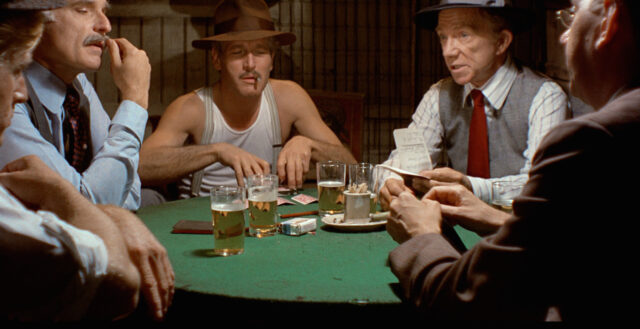
6 Talented but Overlooked Directors You Should Know
Everyone knows Welles, Huston, Kubrick, Spielberg, Scorsese and Nolan. But what about Leisen, Hill, Hiller, Boorman, Mann and Sayles?
For every “name” director, there are several others we feel deserve more recognition. They may have had successes—critical and/or financial—but for some reason they’ve tended to fly under the radar.
Here are six filmmakers whose legacies deserve our respect and appreciation. Even though their names may have faded from memory, their finest work lives on, as you’ll soon discover.
Actors
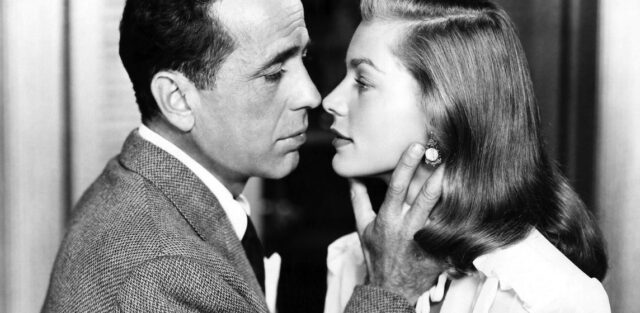
Ultimate Role Models: 7 Transitions from Model to Actor
Keep all those “Zoolander” jokes to yourself, because being a model in a movie doesn’t necessarily mean a pretty face (or body) catwalking across the screen for mere amusement or titillation, or because the director needed a hot date for the Screen Actors Guild awards. Underneath the high cheekbones and sculpted abs often lie the makings of a great actor. Here are some of the folks who made astonishingly smooth moves from still photography to motion pictures.
Actors
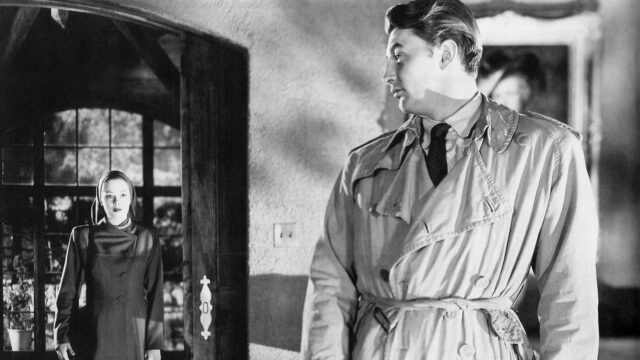
Robert Mitchum: Cooler Than Cool
An actor doesn’t need to be arrested on marijuana charges to become a star, but it sure didn't hurt Robert Mitchum. Of course, by the time of his 1948 pot bust, Mitchum had already received an Oscar nod for Best Supporting Actor for his role in "The Story of GI Joe" (1945), and in 1947 he'd appeared in two noir classics, "Out of the Past" and "Crossfire." But after a week in the county jail and 43 days at a Castaic, California prison farm turned Mitchum into a certified Hollywood bad boy. He fit the part well.
It was Mitchum's casual reaction to the arrest that endeared him to the public. He treated the incident as a lark, amusing the press with jokes about prison life. “It's like Palm Springs,” he said. “But without the riffraff.”
It's no surprise that Mitchum breezed through a short jail sentence, since tough times were nothing new to him. After spending part of his childhood in New York’s Hell’s Kitchen, he dropped out of school to ride the rails with his brother. As he crossed the country at the height of the Depression, Mitchum earned money with odd jobs like digging ditches — even boxing. This rough and tumble kid even did some time on a chain gang in Savannah, Georgia after being popped for vagrancy at age 14.
Actors
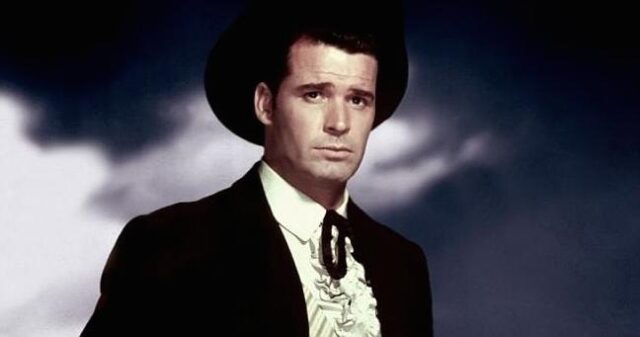
What Made James Garner Irreplaceable
How many actors have looked at James Garner's square jaw and wavy black hair and wished they could cut such a manly figure? Yet Garner was most comfortable in roles where he was considerably less than heroic. He was a regular, folksy kind of guy trapped in a movie star's body. But if you had ever called him a movie star, he'd have probably shrugged it off.
Garner, who passed away Saturday night at age 86, often said that didn't care much about Hollywood, and that he'd stumbled into acting by accident. A friend had once told Garner he planned to work in Los Angeles as an agent. After serving in the Korean War (where he earned two Purple Hearts), Garner worked dozens of odd jobs that took him on a circuitous route to LA. One day Garner noticed a sign on a window with his old friend's name on it. Indeed, Garner's buddy had done just what he said: gone to LA and become an agent.
On a whim, Garner visited his friend and was offered a non-speaking role in a Broadway production of “The Caine Mutiny Court-Martial." Garner was 25, and not interested in acting, but knew he couldn't pass up the job. He especially wanted a chance to meet the show's star, Henry Fonda. Garner would later say, "I swiped practically all my acting style from him." Garner began his film career in 1956, as a contract player for Warner Bros., at a rate of $200 per week. It was, he thought, a way to make a buck.