
Classics
YA on Film — Our Guide to the Best Movies That Are Young And Adult
Young adult used to be just another stage in personal development, starting somewhere around the end of Barbie dolls and army men, and cresting just after the discovery of beer and indie rock. Growing up seems to happen in that one, long, hot zone of emerging identities and burgeoning freedom.
These days, YA is an entire industry of books and movies, a full lifestyle in fact, and one that doesn’t end once the “adult” is no longer “young.” After all, growing up is never quite over, which explains why YA audiences are as likely to be “adult” as they are “young.” For instance, who is the prime audience for “The Hunger Games?” Not just kids.
One forgets that the term “teenager” gained traction only in the 1940s, as the popularity of Frank Sinatra took hold with a multitude of teen girls. Suddenly, this overlooked group had the attention of radio programmers and audiences, and a demographic was born.

Seasonal
9 Top Movies To Put You In That Autumn Mood
Turning leaves, the appearance of tweed, and the visceral thrill of a cool nip in the air all evoke a seasonal tide turning. Autumn on film is one of the medium’s richest commodities, and a visual feast to mirror the one that rolls around every November.
Filmmakers can’t resist all that color or the movement of falling leaves, with deep nostalgia swiftly evoked in a few frames of swirling red and gold. Regardless of plot, cast or dialogue, the unsung hero of the autumnal movie is the cinematographer.
Fall on film seems to break into two categories: city and country; and that city is most often New York. It not only dresses the part, but the energy that arrives in town after Labor Day belongs to a law of physics.

Actors
The Under-Appreciation of Donald Sutherland
Donald Sutherland has landed a pretty nice gig in the "Hunger Games" franchise. As the ruthless President Snow, with his lion's mane of white hair and fluffy beard, he's the sort of iconic villain that fans of the series love to hate.

Actors
Hollywood Heartthrob: Brad Pitt vs Robert Redford
Life is full of weird coincidences: The first time Brad Pitt’s star power really hit me was in a film directed by...Robert Redford.
The movie, of course, was Brad’s big breakthrough, 1992’s “A River Runs Through It”, in which Brad plays the more rebellious of two brothers growing up in 1920’s Montana. Watching it over twenty years ago, I vividly remember thinking that Redford was directing a younger version of himself.
Think about it: they look alike, they talk alike, and a generation apart, each would be considered for the same kind of roles. Each in their younger days had the fair, clean-cut quality commonly referred to as “All-American”.

Documentary
9 Life-Changing Documentaries Streaming on Netflix!
Tonight, make it real; watch a doc.
Here’s a bugaboo of mine: while the documentary form offers viewers incredible rewards, it rarely gets the attention it deserves. Theories abound as to why, the most prominent being that people tend to watch movies to be transported, to actually get away from life as it is.
Perhaps there’s some truth to that, but to avoid the best of these films is to miss out on something truly special. In examining real life, its myriad characters and society as a whole, docs can be wildly entertaining, yet still deliver a form of insight and impact quite distinct from narrative films.
Directors
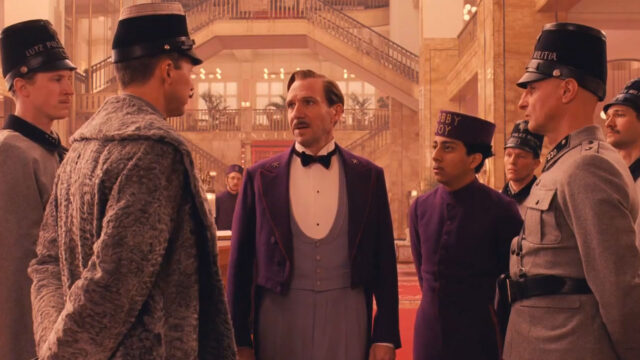
“Grand Budapest Hotel” and Wes Anderson’s Evolution
Wes Anderson’s disarming new film, “The Grand Budapest Hotel,” is undoubtedly his most ambitious to-date. While the director’s signature visual style will be familiar to his fans, “Hotel” feels distinctly fresh and different. From its genre (a caper of sorts) to its complexity (his most complicated story yet, with multiple storylines and flashbacks); from the soundtrack (no British Invasion-era Kinks or Stones) to the script (tight, mercilessly funny, yet with tragic elements), “Hotel” is a bold, exciting step forward in Anderson’s career as a filmmaker.
The main story thread follows the exploits of Gustave M. (Ralph Fiennes) and his protege, Zero Mustafa (newcomer Tony Revolori). Gustave is the titular hotel’s legendary concierge, resident expert on romantic poetry, and gentleman lover to the hotel’s migratory flock of elderly, blonde aristocrats.
When one particularly besmitten widow dies (an unrecognizable Tilda Swinton), it’s discovered that she bequeathed Gustave a priceless painting in her latest will. Her jealous family, led by her jackbooted, eldest son Dmitri (the wonderfully profane Adrien Brody), challenge the will’s legitimacy. Undeterred, Gustave and Zero abscond with the painting. Pretty soon, everyone who knew of this second will begins to disappear. Can Gustave and Zero survive Dmitri’s deadly machinations?